The Shift in Behavioral Assessments
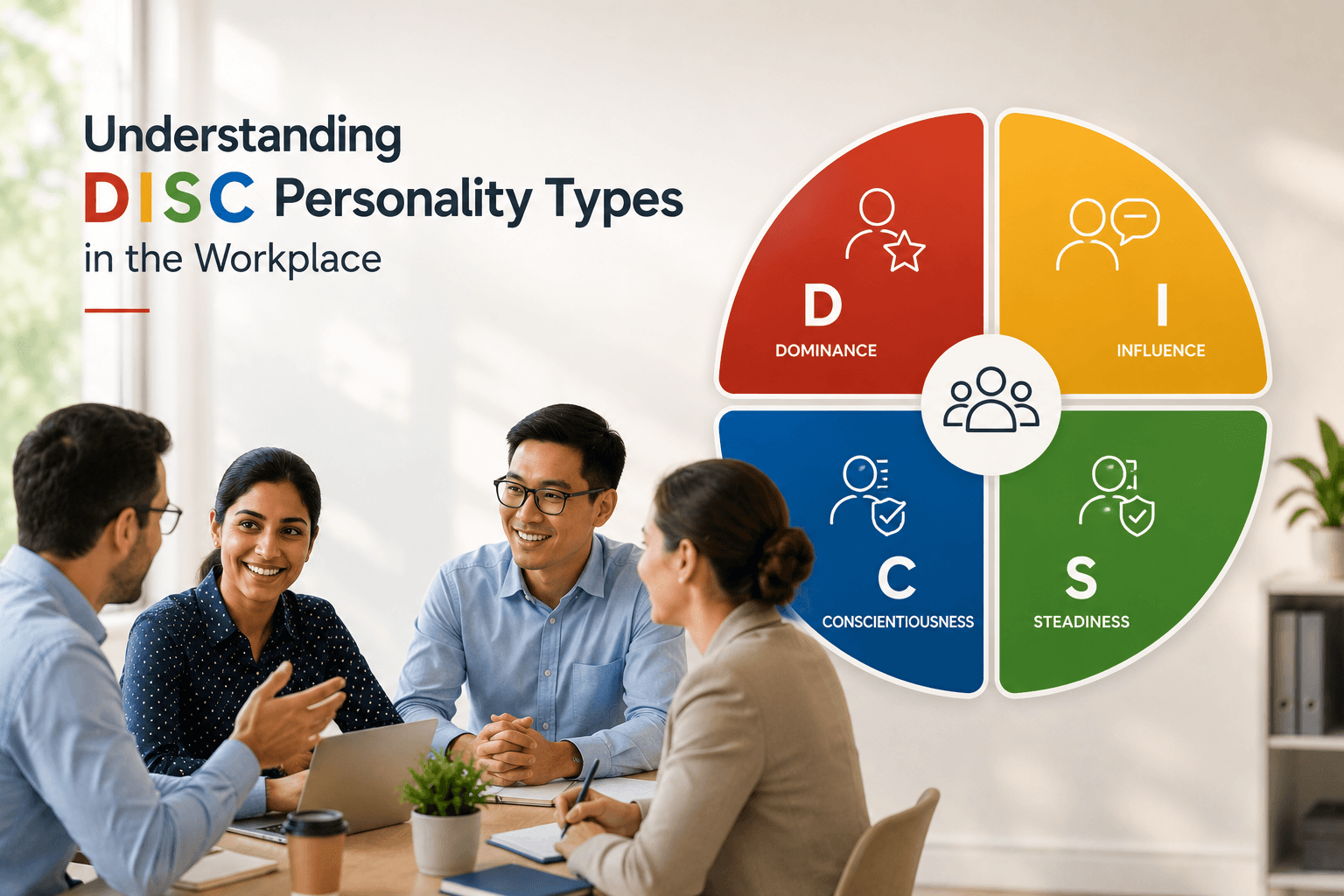
For decades, traditional DISC assessments have been the gold standard for understanding workplace behavior. By categorizing personalities into Dominance, Influence, Steadiness, and Conscientiousness, HR professionals and consultants have transformed team dynamics and communication. But in an era where artificial intelligence reshapes every aspect of business, a new question arises: Are traditional DISC tests becoming obsolete?
Enter the AI DISC assessment.
An AI-powered DISC personality assessment doesn't just put you in a four-quadrant box. It dynamically analyzes responses, synthesizes nuanced behavioral traits, and provides hyper-personalized, context-aware insights that traditional static tests simply cannot match. If you are an HR leader, a team manager, or an independent consultant, choosing the right tool is critical for maximizing ROI and driving real organizational change.
In this comprehensive guide, we'll break down the differences between AI and traditional DISC assessments, evaluate the pros and cons, and help you decide which is best for your team.
1. What is a Traditional DISC Assessment?
A traditional DISC assessment is a self-reported behavioral questionnaire based on William Moulton Marston’s 1928 theory of human emotion. It uses a standardized set of forced-choice questions to place individuals into one of four primary behavioral styles.
Users typically answer 20 to 30 multiple-choice questions. The results are tallied against a static scoring matrix to produce a standard report outlining their primary and secondary behavioral traits.
Pros: Backed by decades of historical use. Widely recognized and understood by senior executives. Extensive certification programs available for deep psychological analysis.
Cons: Reports are often generic and require a certified practitioner to interpret effectively. Legacy providers charge steep per-user fees and expensive annual certifications. The rigid format cannot dynamically adjust questions based on a user's previous answers.
2. What is an AI DISC Assessment?
An AI DISC assessment is a modern behavioral evaluation tool that leverages machine learning and natural language processing to analyze personality traits. Instead of relying solely on static algorithms, AI-powered DISC assessments dynamically interpret nuance, adjust to user inputs, and generate highly customized, actionable reports for specific workplace scenarios.
Why is AI changing the DISC landscape? AI is changing the DISC landscape by automating the debriefing process. Instead of handing a manager a 30-page psychological profile filled with jargon, an AI-powered DISC tool instantly translates the data into practical advice: “Here is exactly how to run a 1-on-1 meeting with Sarah based on her high 'C' and low 'I' profile.”
Pros: Reports adapt to specific roles, such as sales, leadership, or customer success. The AI interprets the data so beautifully that non-experts can immediately apply the insights, eliminating the need for expensive certifications. Platforms like HumanDISC offer highly affordable pricing structures. Some AI assessments adapt in real-time, improving accuracy.
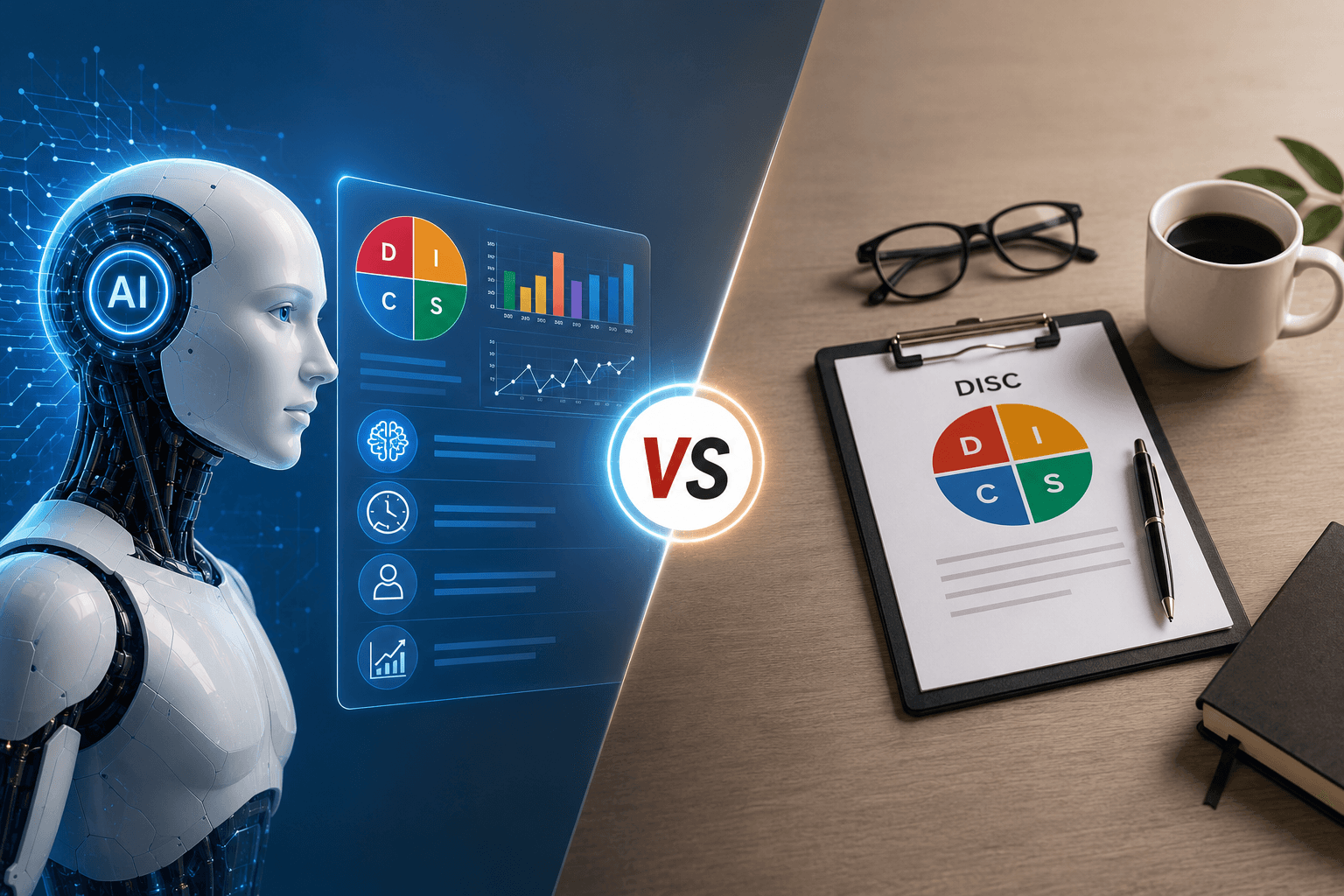
3. AI vs Traditional DISC: Head-to-Head Comparison
| Feature | Traditional DISC | AI-Powered DISC |
|---|---|---|
| Analysis Engine | Static, formula-based scoring | Dynamic, contextual AI processing |
| Report Generation | Standardized, generic templates | Highly personalized, scenario-based insights |
| Certification | Usually required (Expensive & Time-consuming) | Not required (AI acts as the expert interpreter) |
| Cost Model | High per-user fees + Certification costs | Affordable, often subscription or accessible flat rates |
| Speed to Action | Slow; requires expert debriefing | Instant; provides actionable steps for managers |
4. Why Teams are Shifting to AI-Powered DISC
The Death of the "Shelfware" Report: The biggest pain point with traditional assessments is that they become "shelfware." Teams take the test, have a fun two-hour workshop, and then the 30-page PDF sits in an inbox forever. AI-powered DISC tools integrate into daily workflows. The AI can instantly synthesize how two specific team members should navigate a conflict today, not in theory.
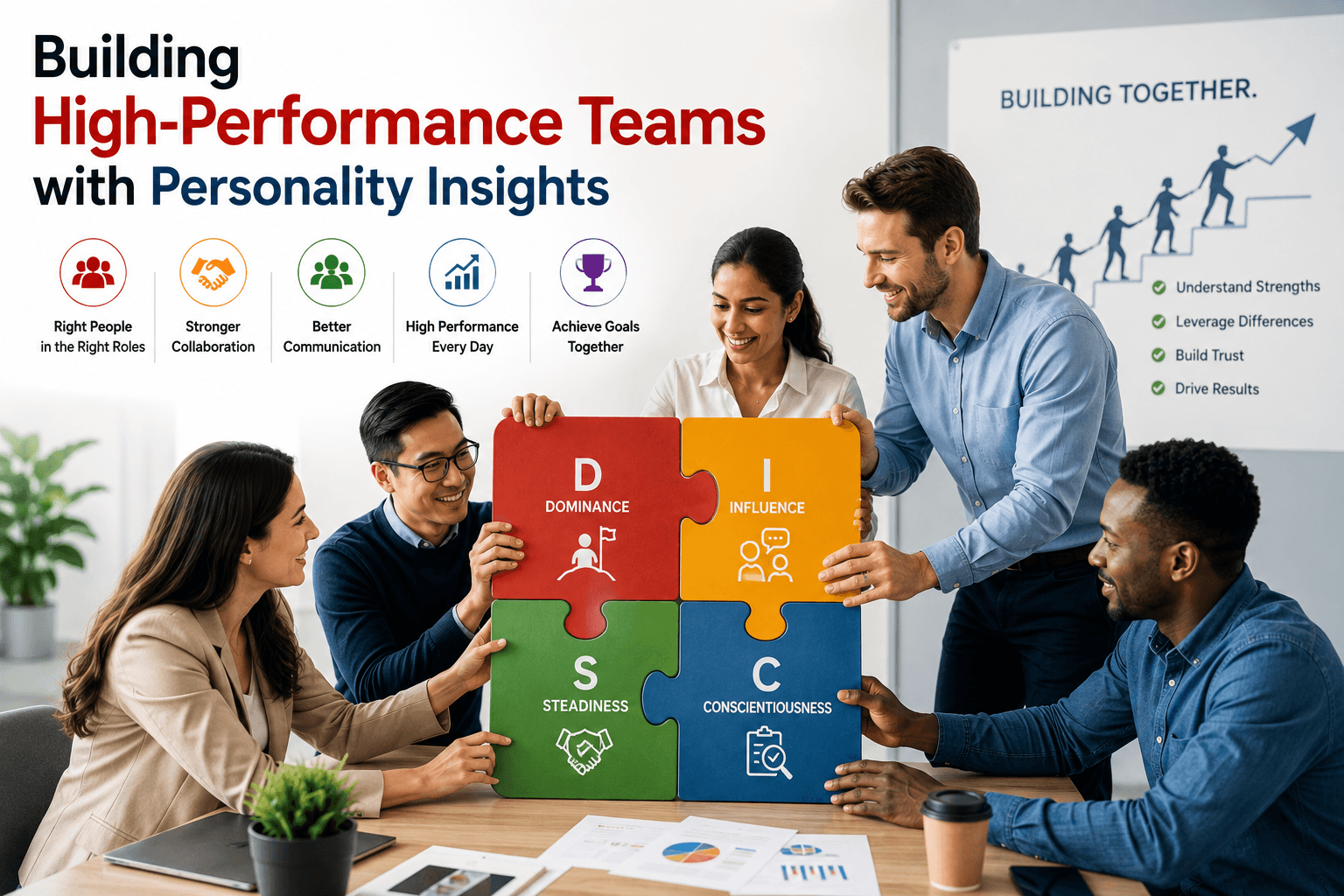
Democratizing Behavioral Insights: In the past, only Fortune 500 companies could afford to certify their HR staff to interpret DISC results. AI DISC assessments democratize this power. By utilizing natural language generation, the AI explains the psychological data in plain English, empowering first-time managers and independent consultants alike.
Superior ROI for Independent Consultants: If you run a boutique consultancy, paying $40-$80 per seat for a traditional DISC test ruins your profit margins. AI-powered tools dramatically lower the overhead cost of delivering high-quality behavioral workshops, allowing consultants to scale their businesses.
Trust Signal: Modern HR leaders at forward-thinking startups are increasingly adopting AI DISC tools to maintain agility without sacrificing the depth of human understanding.
5. Common Mistakes When Choosing a DISC Tool
- Paying for Mandatory Certifications: Unless you are becoming a full-time psychometrician, you do not need to pay thousands of dollars to read a DISC report. AI tools eliminate this requirement.
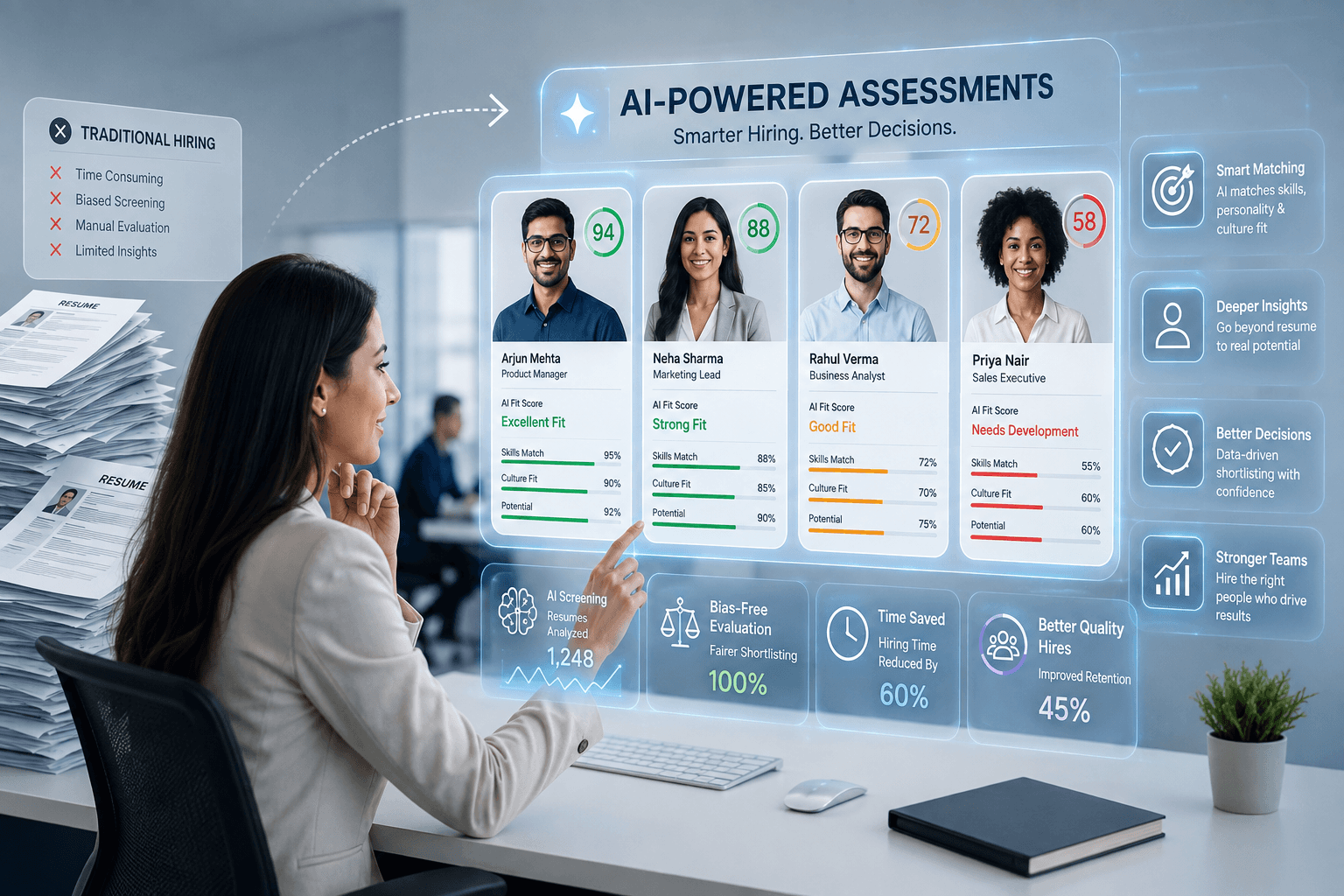
- Using DISC for Hiring Decisions: Never use DISC (traditional or AI) as a standalone pre-employment filter. It measures behavioral style, not competence or cognitive ability.
- Ignoring the User Experience: If the test takes 45 minutes, your team will hate it. Modern AI tools are streamlined, often taking under 15 minutes to complete.
Conclusion & Next Steps
The verdict is clear: While traditional DISC assessments laid the essential groundwork for behavioral psychology in the workplace, AI-powered DISC assessments are the future. By offering deeper personalization, removing the barrier of expensive certifications, and providing instantly actionable advice, AI DISC tools provide a superior ROI for modern teams and consultants.
Ready to see the difference for yourself? Stop paying premium prices for static PDFs.