Why Understanding DISC Personality Types Matters Today
In today's fast-paced, highly collaborative work environment, understanding how people naturally behave, communicate, and resolve conflict is more critical than ever. Have you ever wondered why a perfectly logical email causes tension with one colleague, while another responds with enthusiasm? The answer often lies in understanding DISC personality types.
When teams operate without behavioral awareness, miscommunications thrive. However, when you understand the foundational DISC type characteristics, you unlock a powerful framework for improving workplace communication and team dynamics. In this comprehensive guide, we will explore the DISC model, break down the 4 DISC personality types explained in detail, and provide actionable strategies to help you identify and work with every behavioral style.
What is the DISC Model?
The DISC model is a behavioral assessment framework that categorizes how people act, communicate, and respond to their environment. Rather than measuring intelligence or skills, it focuses strictly on observable behavior. This makes it an incredibly practical tool for HR professionals, managers, and team leaders striving to build high-performing teams.
By understanding DISC behavioral styles in the workplace, organizations can transform how they approach hiring, onboarding, and leadership development. It shifts the focus from "how do we change this person?" to "how can we best communicate with and motivate this person?"
4 DISC Personality Types Explained
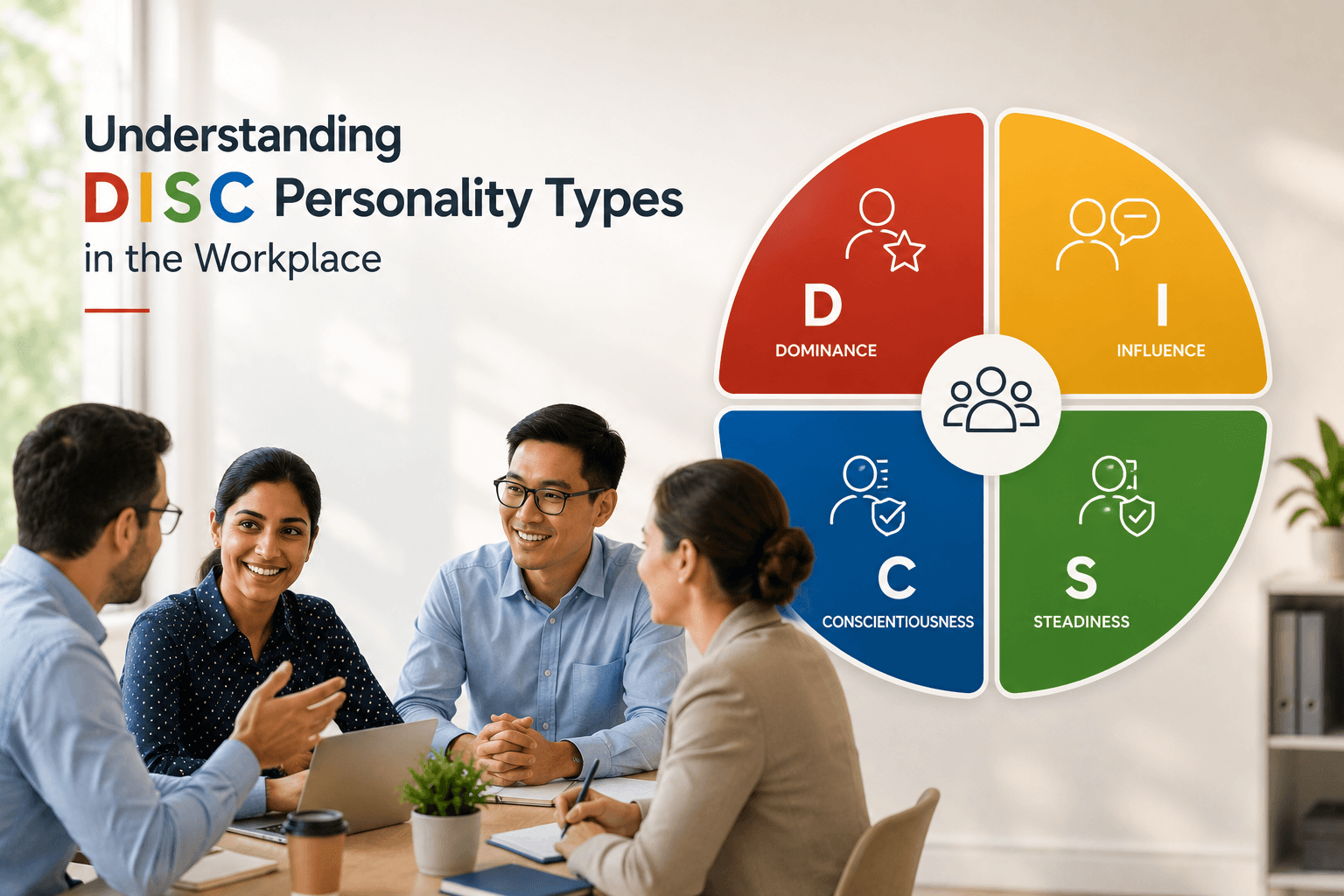
The core of the framework is divided into four distinct behavioral styles: dominance influence steadiness conscientiousness. Let's explore each of the 4 DISC personality types explained in depth, looking at their core traits, strengths, and how they operate in a professional setting.
Dominance (D)
Core traits: Direct, results-oriented, assertive, and competitive.
Individuals with a high Dominance (D) style are the trailblazers of the workplace. They are driven by challenges and prioritize getting things done quickly and efficiently. They focus on the big picture and the bottom line.
Strengths in the workplace: They are natural problem solvers who make quick decisions. They are comfortable taking risks and driving projects to completion under tight deadlines.
Potential challenges: High D types can sometimes appear overly blunt or impatient. Their drive for results can occasionally cause them to overlook details or the emotional needs of their team members.
Communication preferences: Keep it brief, focus on results, and avoid unnecessary details. They want the "what" and the "when."
Leadership style: Direct and authoritative. They lead by setting ambitious goals and pushing the team to achieve them.
Ideal work environments: Fast-paced, innovative environments where they have autonomy and the authority to make decisions.
Practical workplace examples: A high D is the manager who cuts a one-hour meeting down to 15 minutes because the decision was already clear, or the sales leader who thrives on hitting aggressive quarterly targets.
Influence (I)
Core traits: Enthusiastic, optimistic, collaborative, and persuasive.
People with a high Influence (I) style are the social glue of any team. They prioritize relationships, thrive on collaboration, and bring high energy to their projects. They are motivated by social recognition and group activities.
Strengths in the workplace: They excel at brainstorming, motivating others, and building strong networks. They are natural communicators who can easily persuade and inspire their peers.
Potential challenges: High I types may struggle with time management, detailed follow-through, or staying organized. They can sometimes over-promise because of their natural optimism.
Communication preferences: Be warm, friendly, and open. Allow time for socializing before diving into tasks. They want to know the "who" involved in a project.
Leadership style: Inspiring and motivational. They lead by generating enthusiasm and building consensus.
Ideal work environments: Highly interactive, creative environments free from rigid rules and isolation.
Practical workplace examples: A high I is the team member who organizes the company retreat and effortlessly smooths over tensions during a difficult client presentation.
Steadiness (S)
Core traits: Patient, reliable, team-oriented, and accommodating.
Those with a high Steadiness (S) style are the bedrock of the organization. They value harmony, consistency, and cooperation. They are excellent listeners who support their colleagues and prefer to work systematically.
Strengths in the workplace: They are incredibly dependable, loyal, and excellent at maintaining long-term relationships. They create stable, predictable environments and excel at seeing tasks through to the end.
Potential challenges: High S types often resist sudden changes and may struggle to assert themselves in conflicts. They might prioritize team harmony over addressing critical performance issues.
Communication preferences: Be sincere, provide clear expectations, and avoid aggressive or confrontational language. They want to know "how" things will be done.
Leadership style: Supportive and inclusive. They lead by building consensus and ensuring everyone has what they need to succeed.
Ideal work environments: Stable, harmonious environments with clear procedures and cooperative team dynamics.
Practical workplace examples: A high S is the reliable project manager who patiently guides a team through a complex, multi-year implementation, ensuring no one gets left behind.
Conscientiousness (C)
Core traits: Analytical, detail-oriented, precise, and systematic.
Individuals with a high Conscientiousness (C) style are the quality controllers of the workplace. They prioritize accuracy, logic, and objective facts. They strive for perfection and rely on data to drive their decisions.
Strengths in the workplace: They are highly organized, produce flawless work, and excel at complex problem-solving. They naturally identify risks and ensure compliance with standards.
Potential challenges: High C types can suffer from analysis paralysis, overthinking decisions to avoid mistakes. They may come across as overly critical of others' work.
Communication preferences: Provide data, written details, and logical explanations. Avoid emotional appeals. They want to know "why" something is happening based on facts.
Leadership style: Systematic and quality-driven. They lead by establishing high standards and relying on proven methodologies.
Ideal work environments: Quiet, organized environments where quality is valued over speed and clear rules are established.
Practical workplace examples: A high C is the financial analyst who catches a critical error in a quarterly report that everyone else missed, thanks to their meticulous review process.
DISC Type Characteristics in Collaboration
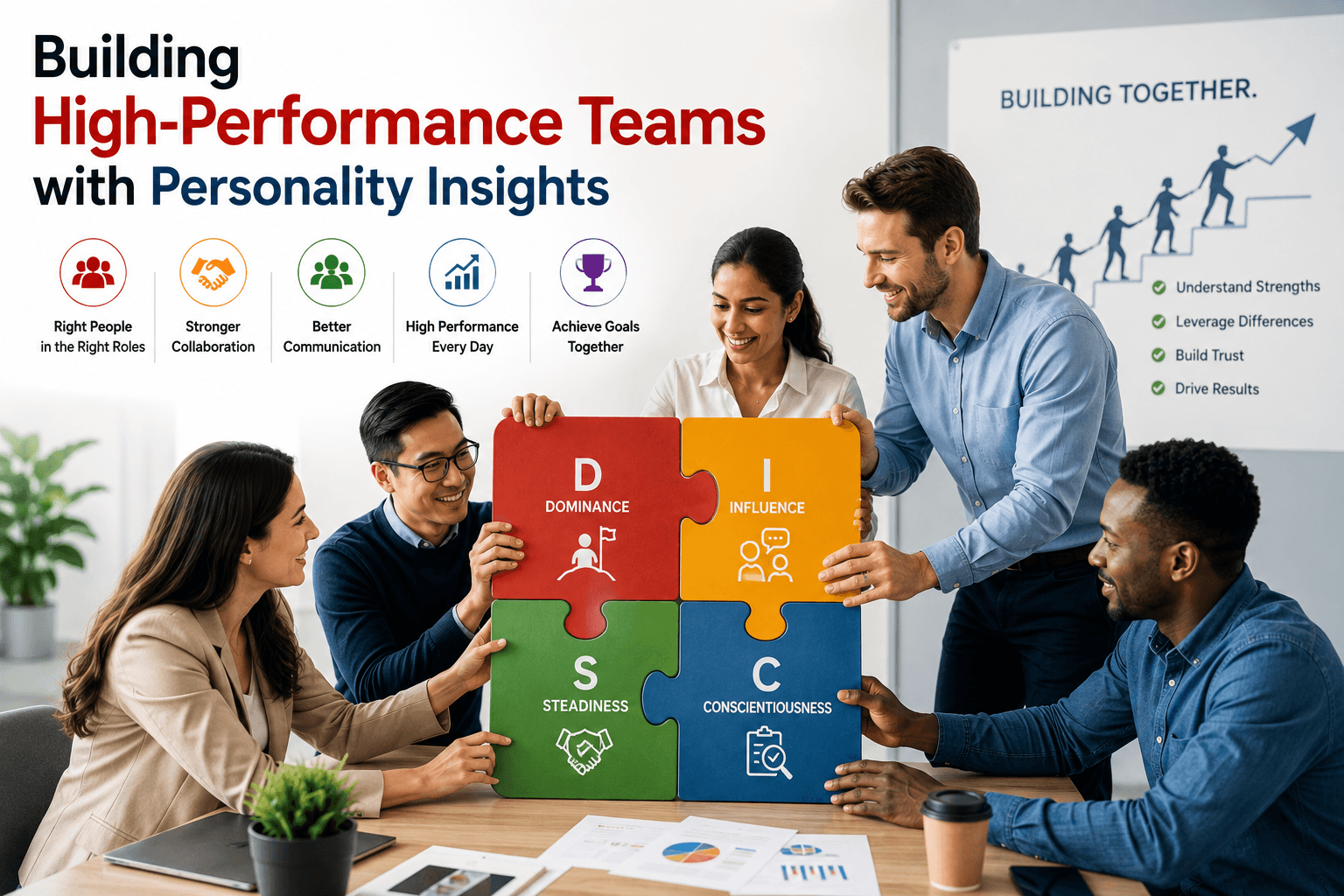
Understanding DISC type characteristics is vital for fostering collaboration, resolving conflicts, and improving decision-making. When a High D and a High C work together, the D provides the momentum, while the C ensures accuracy. When a High I and a High S partner up, the I brings the vision, while the S provides the steady execution.
Conflict often arises from opposing styles. For example, a fast-moving D might view an S as too slow, while the S views the D as reckless. By using the framework of DISC personality types, teams can depersonalize conflict. Instead of assuming negative intent, they recognize it as a difference in behavioral style.
How to Identify DISC Type in the Workplace
You don't always need a formal assessment to gauge someone's primary behavioral style. Knowing how to identify DISC type among your colleagues relies on observing two key dimensions: their pace (fast-paced vs. moderate-paced) and their focus (task-oriented vs. people-oriented).
- Fast-paced & Task-oriented = Dominance (D): They walk fast, speak directly, make quick decisions, and focus on results.
- Fast-paced & People-oriented = Influence (I): They are animated, talkative, easily distracted, and focus on building relationships.
- Moderate-paced & People-oriented = Steadiness (S): They are calm, excellent listeners, deliberate in their actions, and focus on team harmony.
- Moderate-paced & Task-oriented = Conscientiousness (C): They are reserved, ask detailed questions, take time to analyze, and focus on accuracy.
The Impact of DISC Behavioral Styles Workplace Productivity
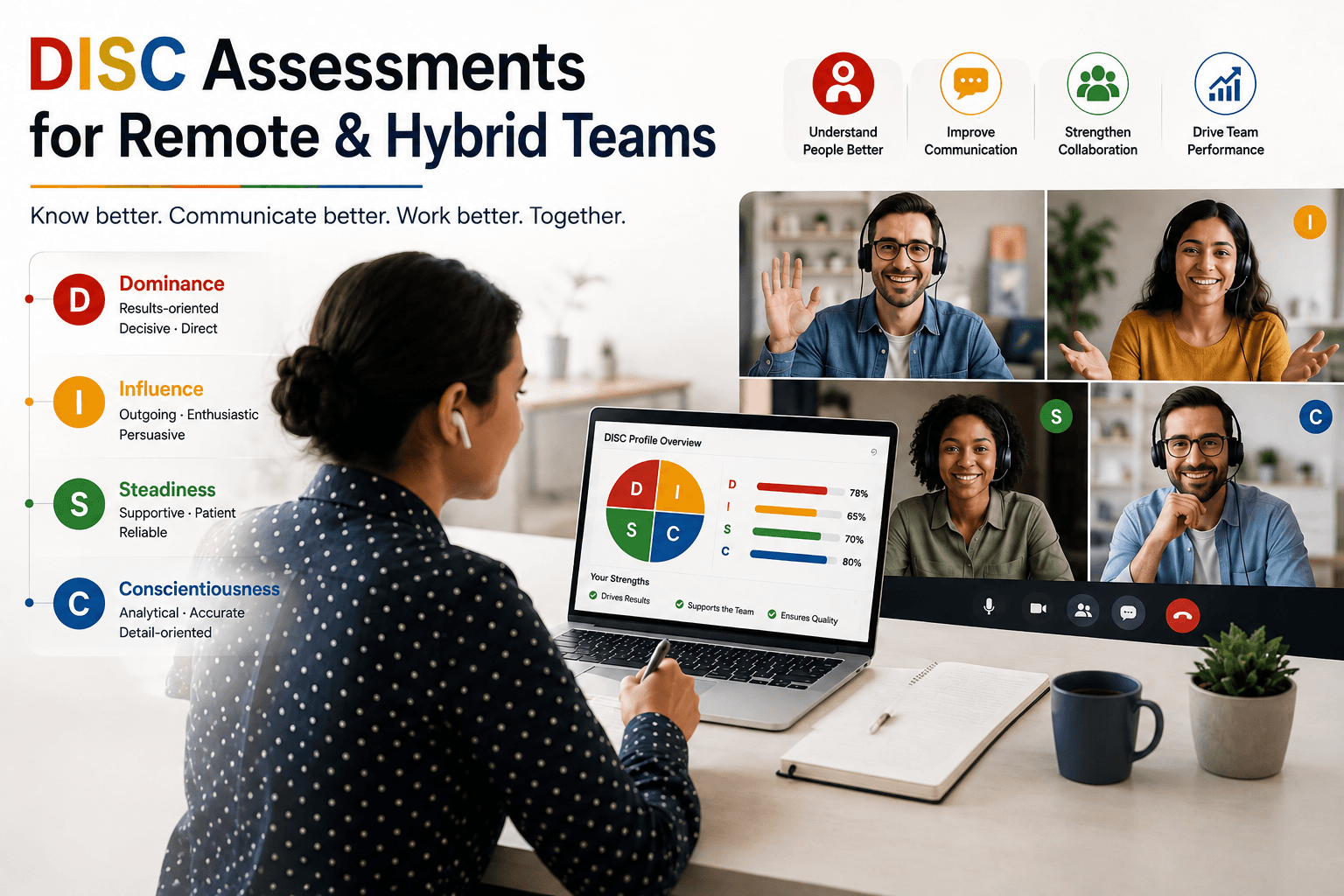
DISC behavioral styles in the workplace have a profound impact on organizational culture and productivity. When leaders tailor their management approach to align with their team's DISC profiles, employee engagement skyrockets. Teams experience less friction, projects move smoother, and individuals feel genuinely understood and valued.
Actionable Tips for Managers
To maximize your team's potential, adapt your communication to their DISC style:
- Managing a D: Give them autonomy. Focus on goals and outcomes. Don't micromanage.
- Managing an I: Provide public recognition. Give them opportunities to collaborate. Help them with structure.
- Managing an S: Give them advance notice of changes. Provide sincere, private appreciation. Be a supportive sounding board.
- Managing a C: Give them the data they need. Allow them time to process information. Respect their need for high standards.
Comparing the Four DISC Personality Types
To summarize, here is a quick comparison of the four styles:
| DISC Type | Focus | Pace | Core Fear |
|---|---|---|---|
| Dominance (D) | Tasks / Results | Fast / Assertive | Being taken advantage of / Losing control |
| Influence (I) | People / Relationships | Fast / Expressive | Social rejection / Being ignored |
| Steadiness (S) | People / Harmony | Moderate / Methodical | Sudden change / Loss of stability |
| Conscientiousness (C) | Tasks / Accuracy | Moderate / Analytical | Criticism of their work / Being wrong |
Common Misunderstandings About DISC
There are a few misconceptions to clear up. First, DISC is not an intelligence test; it measures behavior, not capability. Second, people are not just one single letter. Most people are a blend of two or three styles. Finally, your DISC style is not an excuse for poor behavior. A high D cannot use their profile as an excuse to be rude, just as a high C cannot use theirs as an excuse to delay projects endlessly.
Conclusion
Mastering the understanding of DISC personality types is one of the most effective ways to elevate workplace communication and team dynamics. Whether you are leading a cross-functional project, hiring a new executive, or simply trying to improve your daily interactions with peers, the DISC framework provides a clear, actionable roadmap. By learning to identify and adapt to the dominance influence steadiness conscientiousness styles, you can create a more harmonious, engaged, and highly productive workplace. Ready to transform your team? Try our AI-Powered DISC Personality Test today.